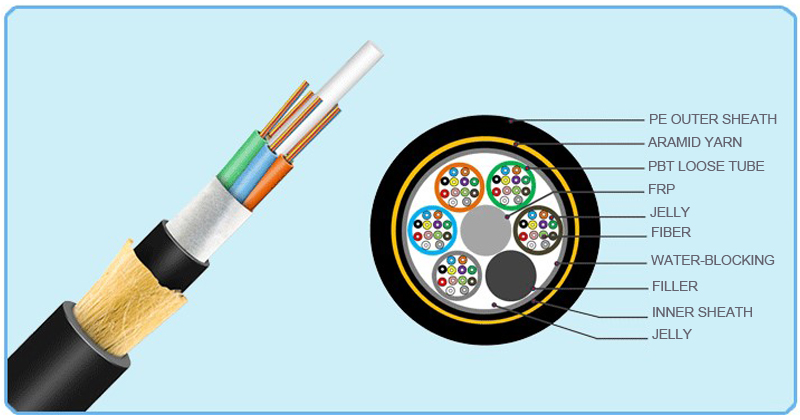
ADSS cable construction process
2023-01-04
Loading and unloading of optical cables: Use lifting equipment to remove the optical cable from the car, or slowly roll the optical cable directly from the springboard. Do not push it directly out of the car. The cable pulley rolls on the ground according to the direction of the sign, and pay attention to removing debris from the ground. To avoid damage to the cable, the cable tray is supported by a flange or lifted by a central rotating shaft. The cable holder can be placed on the cable holder to ensure that the cable is released smoothly, and the cable holder brake device is flexible.
Installation of auxiliary accessories: Install auxiliary accessories in place according to design requirements. If the installation position is changed arbitrarily, the cable potential in the electric field will change, which may increase galvanic corrosion. As a rule, auxiliary accessories are installed and pulleys are suspended, and fiber optic cables pass through the tower from the outside. The pulley on the corner tower should be supported outward to avoid friction between the optical cable and the tower during traction.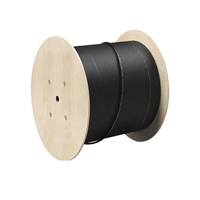 Laying tow ropes: The length of each tow rope should not exceed two kilometers. The unfolding of the tow rope is usually done manually. When the terrain conditions are complex (e.g. rivers, trees, etc.), the use of cable cars should be considered to drive the ropes. The belt is then driven by a rope. The connection between the tow ropes must be reliable, and a retractor should be added to the connection between the tow rope and the fiber optic cable.
Arrangement of tractors and tensioners: Install tractors and tensioners in the tower and tower, respectively. The tensile machine should be placed away from the terminal tower, and the height of the terminal tower should be more than four times the height of the suspension point. The tensioner should be fixed to the ground to withstand traction and tension. The output direction of the tensioner should be consistent with the output direction of the terminal tower.
Inspection before towing: After laying the tow rope, a certain tension should be applied (not less than the tension when pulling the optical cable), and the strength and connection points of the tow rope should be checked to avoid the sudden break of the optical cable due to the breaking of the tow rope during the towing process. During towing, the fiber optic cable is always kept at a distance from other obstacles.
Traction of optical cable: The traction process of ADSS optical cable is the key to the entire construction. Communication and communication should be maintained at both ends, and the speed should not exceed 20m/min. The tension of the fiber optic cable is constant and the speed is forward. During the towing process, someone should advance synchronously with the front end of the optical cable, and observe whether the optical cable touches the branches, buildings, ground, etc. before observing. If there is contact, increase the tension. When the end of the optical cable passes through the pulley, it is necessary to climb the tower to observe whether the connection between the optical cable and the tow rope passes through the pulley smoothly, and assist if necessary. At the same time, check whether the surface of the optical cable is damaged and find the problem in time. If necessary, use a double-string pulley around the corner and always protect it to prevent the cable from falling off the pulley. The tension applied to the fiber optic cable should not be too large. Sag and tensiometer datasheets are available for each type of ADSS fiber optic cable product. When the cable is pulled, it prevents the cable from twisting. When the fiber optic cable twists in a certain direction, it should be stopped immediately. Release the line, remove tension, and reorient the pulley.
Installation of auxiliary accessories: Install auxiliary accessories in place according to design requirements. If the installation position is changed arbitrarily, the cable potential in the electric field will change, which may increase galvanic corrosion. As a rule, auxiliary accessories are installed and pulleys are suspended, and fiber optic cables pass through the tower from the outside. The pulley on the corner tower should be supported outward to avoid friction between the optical cable and the tower during traction.
Arrangement of tractors and tensioners: Install tractors and tensioners in the tower and tower, respectively. The tensile machine should be placed away from the terminal tower, and the height of the terminal tower should be more than four times the height of the suspension point. The tensioner should be fixed to the ground to withstand traction and tension. The output direction of the tensioner should be consistent with the output direction of the terminal tower.
Inspection before towing: After laying the tow rope, a certain tension should be applied (not less than the tension when pulling the optical cable), and the strength and connection points of the tow rope should be checked to avoid the sudden break of the optical cable due to the breaking of the tow rope during the towing process. During towing, the fiber optic cable is always kept at a distance from other obstacles.
Traction of optical cable: The traction process of ADSS optical cable is the key to the entire construction. Communication and communication should be maintained at both ends, and the speed should not exceed 20m/min. The tension of the fiber optic cable is constant and the speed is forward. During the towing process, someone should advance synchronously with the front end of the optical cable, and observe whether the optical cable touches the branches, buildings, ground, etc. before observing. If there is contact, increase the tension. When the end of the optical cable passes through the pulley, it is necessary to climb the tower to observe whether the connection between the optical cable and the tow rope passes through the pulley smoothly, and assist if necessary. At the same time, check whether the surface of the optical cable is damaged and find the problem in time. If necessary, use a double-string pulley around the corner and always protect it to prevent the cable from falling off the pulley. The tension applied to the fiber optic cable should not be too large. Sag and tensiometer datasheets are available for each type of ADSS fiber optic cable product. When the cable is pulled, it prevents the cable from twisting. When the fiber optic cable twists in a certain direction, it should be stopped immediately. Release the line, remove tension, and reorient the pulley.